
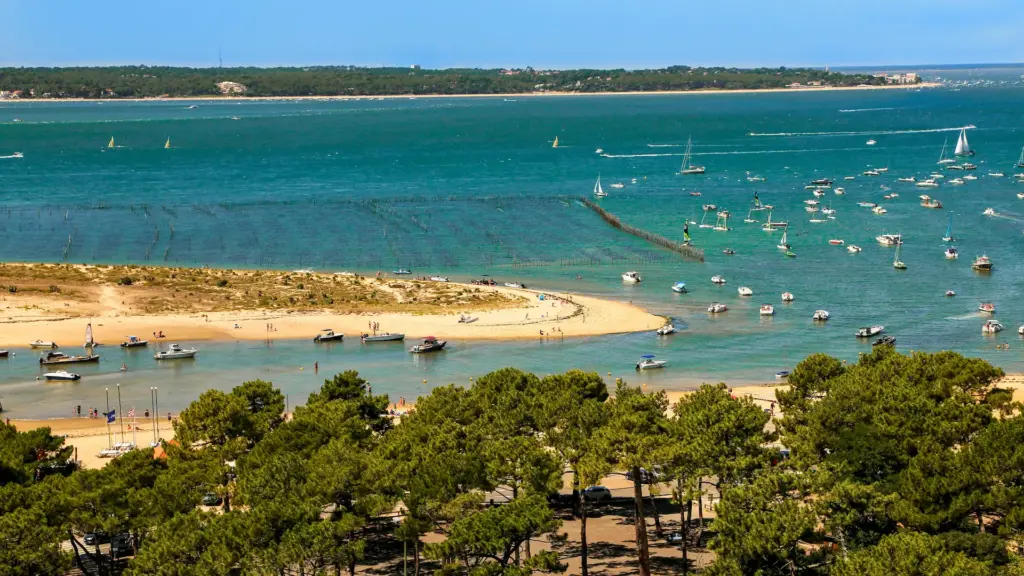
During your stay in Gironde, take on the Citadelle de Blaye, an impressive military fortress designed by Vauban. Listed as a UNESCO World Heritage Site, the citadel can now be visited from coast to coast, between its exceptional architectural heritage, vineyards and estuary. Discover it!
Between vineyards and estuary, a military masterpiece by Vauban
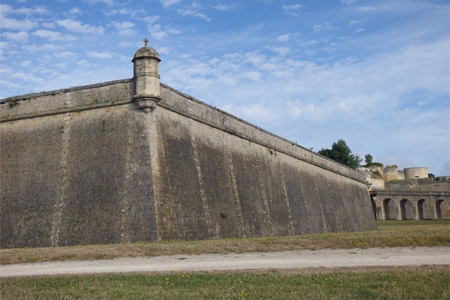
45 km north of Bordeaux, dominating the right bank of the Gironde, the citadel of Blaye is one of the most visited sites in Gironde. Listed as a UNESCO World Heritage Site since July 7, 2008, it is one of France’s most remarkable citadels, a testament to Vauban ‘s 17th-century military genius.
In 1685, Louis XIV asked Sébastien Le Prestre, Marquis de Vauban, to review the defense system of the Gironde estuary , in order to make himself “master of the river” and protect the port of Bordeaux from the guns of the English fleet. The Sun King‘s military architect, the master of the kingdom’s fortresses, drew up a plan for a new fortress comprising two orillon bastions in the center and two half-bastions on the banks of the Gironde. The work was entrusted to François Ferry, a military engineer, and took five years to complete. From then on, the “sentinel of Bordeaux” covered more than 30 hectares and could house a garrison of 1,500 men, and nearly 5,000 soldiers in the event of a siege.
A fine tactician and skilled strategist, Vauban also decided to build two other forts to defend the estuary by crossfire: Fort Médoc, on the left bank of the Gironde, and Fort Pâté on one of the islands in the middle of the river. This defensive triptych, unique in Europe – the famous “Verrou Vauban” – made the port of Bordeaux impregnable from the sea!
From the Porte Royale to the Porte Dauphine, a veritable “city within a city”.
Today, the Blaye citadel has preserved intact the defense system put in place by Vauban, with its 1.5 km of ramparts, gates, underground passages, former convent, prison, powder magazine and cannons still aimed at the river. The former barracks of the Place d’Armes, once the center of military life, are now home to boutiques, craftsmen’s workshops and restaurants where tourists come and go.
A must-see for visitors and walkers, the Chemin des Remparts offers one of the finest panoramic views of the town of Blaye and the Gironde estuary. For history and heritage buffs, a visit to the prison is a must. The former dungeons now house the Musée d’Histoire et d’Archéologie de Blaye.
However, the citadel has not yet revealed all its secrets. Let’s head for the fortress’s underground passages. The bowels of the citadel are riddled with underground passages open to the public, secret passages and hidden rooms. Discover them on a guided tour.
Little train ride
In summer, climb aboard the little train for a guided tour of the Citadelle and Blaye vineyards. Discover Clos de l’Echauguette, an organic micro-vineyard nestled in the heart of the Citadelle de Blaye, or stop off at the Maison du Vin, located in the center of Blaye, opposite the Citadelle. A showcase for Blaye Côtes de Bordeaux wines, the Maison du Vin offers a selection of 300 different wines and crus classés.
Cruise on the Gironde estuary
Departing from Blaye, take a cruise on the Gironde estuary , the largest in Europe, with its 70 kilometers and three unspoiled, natural and wild islands. On the program: guided navigation on the river, discovery of the estuary archipelago and its vineyards, stopovers on Île Nouvelle, Île de Patiras and Île Margaux.
PRACTICAL INFORMATION
- The citadel is open all year round, free of charge.
- Guided tours at 11 a.m., 2 p.m., 3:30 p.m. and 5 p.m., departing from the office on rue du Couvent des Minimes, in the heart of the citadel.
- To avoid a long detour, we recommend leaving your car at Lamarque and taking the ferry to the Citadelle de Blaye (approx. 20-minute crossing).
- Further information: www.bbte.fr