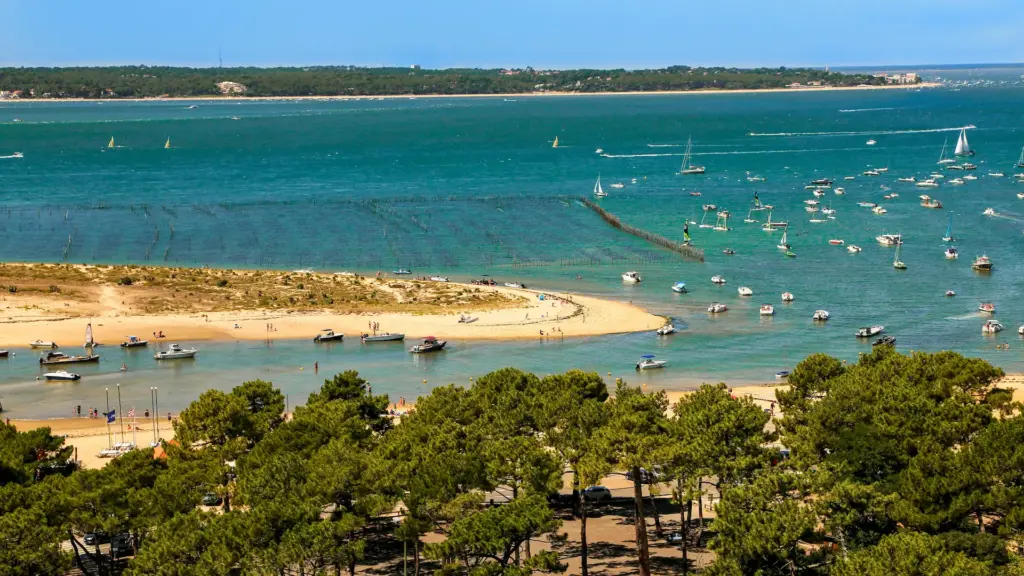
In Gironde, the Bay of Arcachon is a wonderful sanctuary for wildlife. It is home to exceptional biodiversity. It’s not uncommon to spot such remarkable animals as the bottlenose dolphin, leatherback turtle and grey seal.
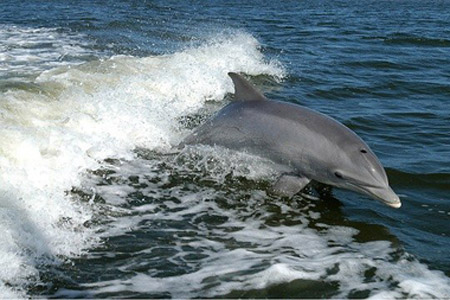
Bottlenose dolphin (Tursiops truncatus)
Bottlenose dolphins are observed year-round on sea outings around the Banc d’Arguin Nature Reserve. Used to sailing off the Bassin d’Arcachon, they generally live in sedentary groups close to the coast. Made famous by the TV series “Flipper the dolphin”, this highly intelligent marine mammal is capable of spectacular somersaults. Classified as a small cetacean, the Bottlenose Dolphin measures between 2 and 4 m at maturity. Its weight can exceed 300 kg.
Leatherback turtle (Dermochelys coriacea)
The leatherback turtle can be seen in the mouth of the Bassin during the summer months. It is the largest of today’s seven species of sea turtle. It averages 1m80 in length and can weigh up to 800 kilos! This makes them very easy to observe, as they are large and regularly rise to the surface (every ten minutes or so), where they swim slowly. Considered an internationally vulnerable species, leatherbacks feed mainly on jellyfish and fish larvae.
Grey seal (Halichoerus grypus)
This small seal frequents coastal areas and is particularly fond of the sandbanks of the Arcachon Basin. The Grey Seal lives between 20 and 35 years and can weigh up to 250 kg as an adult. On average, they eat 4 kg of fish a day. It’s important not to get too close to them, and to keep your distance so as not to disturb them. Nevertheless, the Grey Seal is a very curious animal. They may approach a boat or kayak, or accompany surfers and divers on their underwater adventures. Also worth noting is the presence of calf-marine seals, observed simultaneously in the Parc naturel marin Bassin d’Arcachon.
The Seahorse (Hippocampus)
The Arcachon basin is home to the largest concentration of seahorses in France. They live hidden in eelgrass beds, around oyster beds, piers and the periphery of Ile aux Oiseaux. It’s also known as the sea horse, because the shape of its body and head are reminiscent of a horse. And to think that a few decades ago, they were dried to be sold to tourists as souvenirs. Fortunately, the little sea horse is now a protected species.
Barnacle goose (Branta bernicla)
Although France is home to around 60% of the world’s wintering Brant population, it is the Bay of Arcachon that boasts the highest concentration of individuals in France, particularly around Gujan-Mestras. Despite their large numbers (almost 50,000 individuals), these little Siberian sea geese are rather discreet, and few walkers notice their presence. Every autumn, LPO Aquitaine, the Landes de Gascogne Regional Nature Park and Sepanso organize the Barnacle Goose Festival. Their departure heralds the imminent arrival of spring.